News
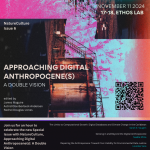
Special Issue launch: Approaching Digital Anthropocenes
On November 11th, 2024, editors James Maguire, Astrid Oberborbeck Andersen and Rachel Douglas-Jones will host a launch of special issue Approaching Digital Anthropocenes. The collection originated at the 2020 EASST + 4S conference, known as “Locating and Timing Matters: Significance and Agency of STS in emerging worlds”. It was meant to take place in […]

10 years of Shut up and Write at ITU
This September we celebrated 10 years of the Shut up and Write group at the IT University of Copenhagen. As this post documents, it started in 2014 and has continued every semester since. It has had many convenors over the years, and special thanks go to those who have prepared the snacks, coffee and tea. […]
 TiP on Mastodon
- UntitledVast turn out for the DIGI-FRONT Symposium at Goldsmiths, London, with Irina Papazu welcoming an international audience
- UntitledBook launch Monday 26.1.26 at 13:30-15 in ETHOS Lab, IT University of Copenhagen! https://billetto.dk/en/e/book-launch-the-smartification-of-everything-critical-perspectives-in-sciences-arts-and-society-billetter-1790120