News
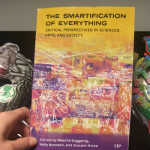
New Book: “The Smartification of Everything”
The Smartification of Everything: Critical Perspectives in Sciences, Arts and Society is a new volume from the University of Toronto Press, edited by Mascha Gugganig, Kelly Bronson and Vincent Mirza. The book was published following a conference co-hosted by ETHOS Lab. In March 2022, a Symposium and Exhibition took place partly online and partly in Ottawa, Canada. […]
The First TiP Zine is Out
In June of 2024, TiP invited Zine expert Janna Aldaraji to facilitate a workshop on zine making – the history and politics and purpose of zines. TiP had prepared by creating some genres of zine pages we could imagine making together, building on the 2018 publication of the TiP Magazine. With Janna’s support and […]
 TiP on Mastodon
- UntitledVast turn out for the DIGI-FRONT Symposium at Goldsmiths, London, with Irina Papazu welcoming an international audience
- UntitledBook launch Monday 26.1.26 at 13:30-15 in ETHOS Lab, IT University of Copenhagen! https://billetto.dk/en/e/book-launch-the-smartification-of-everything-critical-perspectives-in-sciences-arts-and-society-billetter-1790120